Archive for the ‘Archives’ Category
LEED Sustainable Sites c2, Community Connectivity
View LEED Credit SS 2, CI 2009 in a larger map
|
Green Cincinnati 126 W 14th St
|
|||
|
Krause’s of Findlay Market Inc
|
|||
|
Alabama Fish Bar
|
|||
|
Old St Mary’s Church
|
|||
|
Foundation Bank
|
|||
|
Rohs Hardware Inc
|
|||
|
Washington Park
|
|||
|
Robert A Taft Information Technology High School
|
|||
|
Emanuel Community Center
|
|||
|
Kroger
|
|||
|
Symphony Hotel Bed & Breakfast
|
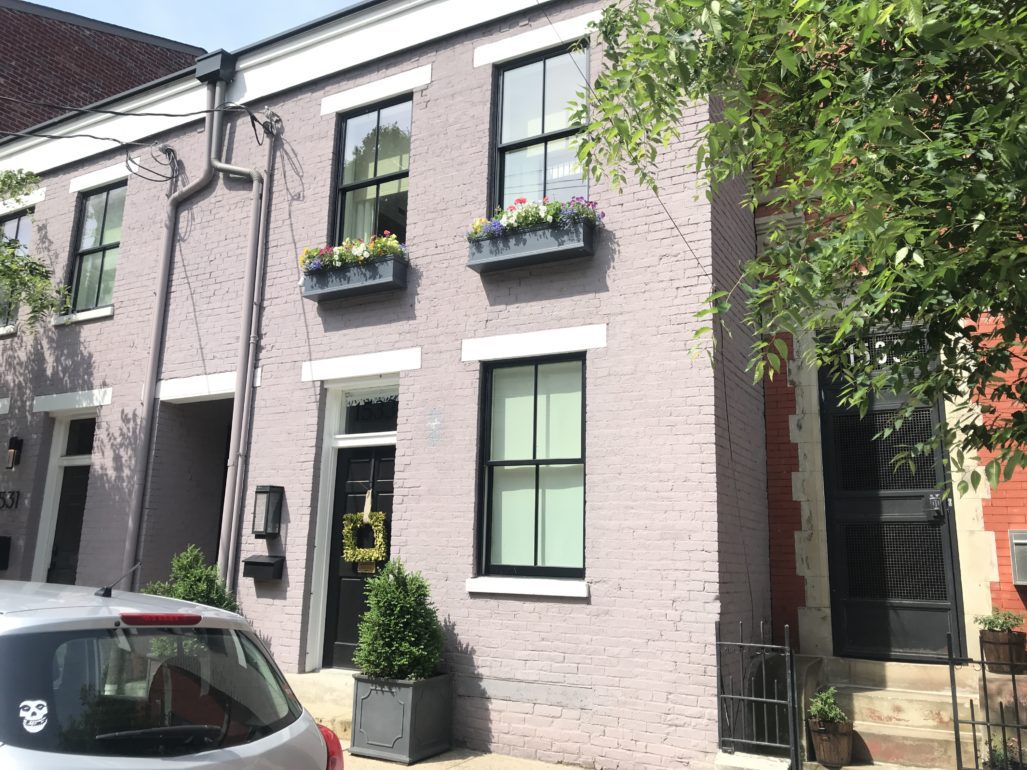
City Home - Schickel Design Architects’ Energy Star level 5 homes on Pleasant Street
April 27, 2010 Activities:
- 5:30 - 7:30 pm - City Home: “Home Again” Educational Presentation and Tour Planned for April 27. Please email or call 513-721-4000 for an invitation, 124 West 14th Street, Cin., OH 45202 (next to Music Hall).
- 5:30 - 10:30 pm - Green Cincinnati Education Advocacy and Lohre & Associates LEED Registered offices Open House: Learn more about how the office is striving for Platinum CI Certification, and enjoy food and beverages in the courtyard until 9:30 pm. Please bring a friend
Join us for this informative tour of Schickel Design Architects’ Energy Star level 5 homes on Pleasant Street just north of Washington Park and Music Hall. Tour is from 5:30 to 6:30 pm, we’ll gather at 1414 Pleasant St., 45202 for an overview of the project and then tour the home and others in the neighborhood.
Level 5 is the highest Energy Star rating for homes up to 30% more efficient than standard homes, learn more. City Home came about in part because of the vision and dedication of Martha Schickel. In 2004 she researched the area near her newly renovated studio at at 124 W. 14th St. and worked over the next 5 years to see it start the revitalization of Pleasant St. When Schickel’s comprehensive vision is completed, the City Home transformation will include renovated and new housing all the way to Findley Market. RSVP and we will have a packet of information ready for you. Learn more at Schickel Design Fine Art and Architecture.
********
NY Times Picks on LEED
A front page article from The New York Times (August 31, 2009) takes aim at easy criticisms of LEED, namely picking on individual points for landscapes with native plants and architecture featuring floor-to-ceiling windows. How we wish the article would have included a discussion of a basic LEED structure’s most significant attribute — the fundamental commissioning prerequisite. Fundamental commissioning is the third-party verification process that ensures a structure’s systems specified are properly installed and operating efficiently. Quoting the USGBC LEED NC 2.2 Reference Guide, “A properly designed and executed Commissioning Plan may reduce errors and omissions in the design and installation process, improve coordination, reduce change orders, and generate substantial operational cost savings compared to systems that are not commissioned. Successful implementation of the commissioning process often yields improvements in energy efficiency of 5% to 10%.” Instead, The Times’ piece attempts to de-contextualize the kind (or amount) of materials, or HVAC systems spec’d in the particular (Ohio) project profiled.
Check out the Times story and look for our article “How to Take the LEED AP Exam” in the October issue of ddi magazine, a retail trade. There’s also a story on the first-ever LEED Platinum Retail project — a rundown of Hannaford’s new Augusta, Maine, supermarket.
Aileron Business Center, Dayton OH
We toured Thursday, July 23 from 10 to 11 am at the Aileron Center for Business Excellence just north of Dayton, OH. From all reports this is a “Can’t Miss” LEED Project and is!

The Branding Seminar ran from 8 to 10 am and included breakfast. Go to http://www.aileron.net/ for more information.
From their site, “About Aileron
In the words of Clay Mathile, former owner of The Iams Company, ‘To be a successful entrepreneur, you must have unwavering faith and commitment to your dreams, no matter how many obstacles are put in your path.’ Helping you achieve those dreams and becoming a champion of free enterprise are the foundation upon which Aileron was built.
Our mission is simple: to create an environment for owners of private enterprise to implement professional management. To achieve that mission, we’ve developed a variety of services tailored to the specific
needs of the private business owner. From a state-of-the-art campus and one-on-one consulting services to our popular Course for Presidents and other programs and workshops, you’ll find the resources you need to plan for a successful future.
Questions? Phone: Toll-Free: 1-888-880-6139 | Greater Dayton: 937-669-6500 | Email Mail: 8860 Wildcat Road, Dayton, OH 45371 | Fax: 937-667-4970″
Aileron is a good example of a green field project that is sensitive to the surroundings with native plantings, road side drainage gravel and sweeping mounds formed into the site.
The buildings are arranged in a U shape facing the sun with solar shading and a pond. The project’s materials include polished native limestone. The parking lot has three electric charging stations. Overall, Aileron is one of the finest regional examples Green Cincinnati has toured of a commercial building demonstrating sustainable building practices in a new structure which reflects its sustainable goals and is unified in its siting, construction and the purpose of the campus which is a business think tank and management coaching non-profit. It even processes all of its black water on site.

Metals - Recycled and Regional Credit Guide
Metal Recycling content and Regional extraction, harvesting and manufacturing locations may be difficult to determine or even to understand for your project. Here are some of the highlights of a letter Green Cincinnati prepared for American Metal Supply to assist their customers learning the basics of documentation as well as typical steel mill documentation available.
Dear LEED Project Documentation Manager
American Metal Supply can help you achieve your U.S. Green Building Council’s LEED (Leadership in Environmental and Energy Design) project documentation goals. As you probably already know:
All steel may use the 25-percent DEFAULT RECYCLED CONTENT
Recycled content may be as high as 35-percent to 95-percent
Regional content may be as high as 60-percent to 100-percent
While we can guarantee the minimum 25-percent recycled content, we are committed to using the most efficient recycling mills to maximize the recycled percentages. We will also attempt to source within the 500 mile project radius to gain additional credits for regional content (This is driven by project and mill geography as well as availability of material from the optimal regional source.)
The intent of LEED Recycled Content is to increase the demand for building products that incorporate recycled content materials, thereby reducing impacts from extraction and processing of virgin materials.
25 Percent Default Steel Recycled Content - Until you receive your order’s documentation, LEED allows you to use 25 percent as the recycled content for steel. The average recycled content of rebar and most structural shapes (red iron) is around 95 percent. Average recycled content of light-gauge steel studs and other light-gauge framing is 35 percent. The LEED definition of recycled content encourages post-consumer recycled content. The LEED goals are to use materials with recycled content such as the sum of the post-consumer recycled content plus 1/2 of the pre-consumer content constitutes at least 10 percent based on cost, of the total value of the materials in the project. One to two additional points may be earned for up to 20- to 30-percent. Mechanical, electrical and plumbing components are excluded. If only a fraction of a product or material is recycled, then only that percentage (by weight) must contribute to the recycled value.
Definition: Post-Consumer Recycled Content - is the percentage of material in a product that was consumer waste. The recycled material was generated by household, commercial, industrial, or institutional end-users and can no longer be used for its intended purpose. It includes returns of materials from the distribution chain (ISO 14021). Examples include construction and demolition debris, materials collected though recycling programs, discarded products (e.g. furniture, cabinetry, decking), and landscaping waste (e.g. leaves, grass clippings, tree trimmings).
Definition: Pre-Consumer Recycled Content - formerly known as postindustrial content, is the percentage of material in a product that is recycled from manufacturing waste. Examples include planer shavings, sawdust, bagasse, walnut shells, culls, trimmed materials, over issue publications, and obsolete inventories. Excluded are rework, regrind, or scrap materials capable of being reclaimed within the same process that generated them (ISO 14021), for example, foundry trees and scrap put back in the Electric Arc Furnace.
The intent of LEED Regional Content is to increase demand for building materials and products that are extracted and manufactured within the region, thereby supporting the use of indigenous resources and reducing the environmental impacts from transportation.
Regional Content Percentage - There are no default standards for regional content percentages. With special attention to sourcing we can provide a high percentage to meet the regional content requirements of your project location. For example a local LEED Platinum project documented steel components with regional contents of 60-to 100-percent. The LEED goals are to use building materials or products that have been extracted, harvested or recovered, as well as manufactured, within 500 miles of the project site for a minimum of 10%, based on cost of the total materials value. One to two additional points may be earned for up to 20- to 40-percent. Mechanical, electrical and plumbing components are excluded. If only a fraction of a product or material is extracted, harvested, or recovered and manufactured locally, then only that percentage (by weight) must contribute to the regional value. Use the location from which they were salvaged as the point of extraction or harvest.
Definition: Regionally Extracted Materials - are raw materials taken from within 500-mile radius of the project site.
Definition: Regionally Manufactured Materials - are assembled as finished products within a 500-mile radius of the project site. Assembly does not include on-site assemble, erection, or installation of finished components.
We want to make it easier being green. Please feel free to contact us with any questions you may have or for presentations about LEED credit documentation. Thank you for your interest in American Metal Supply’s products and services. Complete documentation will be supplied with you order.
Best regards,
Michael Guy
Vice President
American Metal Supply
Cincinnati (513) 396-6600
Louisville (502) 634-4321
Home Tour, Seneca Place, Covington KY
• LEED Certification doesn’t have to cost more than a few percent
• Even a small home can be LEED
• Traditional designs can be LEED
• Energy and water savings quickly offset added costs
• Manufactured homes help reduce waste and speed construction
On track for LEED Gold this row house is a perfect example of green building that suits the style and architecture of the region. And it’s great to visit Covington and learn more about all the Green things that The Center for Great Neighborhoods of Covington, KY is doing south of the river. The tour will be Wednesday July 29 from 5:30 to 6:30 pm. RSVP for the tour to Green Cincinnati. The home address is 524 Thomas St., Covington, KY 41014.
Go to Center for Great Neigborhoods - Seneca Place for more information and a map. Here is Seneca Place’s site. If you can’t wait and would like a personal tour (it is for sale) please contact Rachel Hastings, Director of Neighborhoods & Housing Initiatives, rachel@greatneighborhoods.org, 859-491-2220.
From the Seneca Place site,
“The Center For Great Neighborhoods of Covington is proud to deliver this new construction p
roject to the charming Austinburg Neighborhood. Eight system built homes are planned for the 500 block of Thomas Street beginning November of 2007 with prices starting from $149,900 - $190,000. These homes are energy star rated and will ‘hopefully’ carry the LEED GOLD certification, suberbly insulated with hybrid heating systems and can be built start to finish in 12 weeks. Utility bills are estimated to be at approximately $100 per month. There are two floor plans to choose from with customizable finish options. Both have three bedrooms and two and a half baths with off street parking. If you like urban living with all of it’s conveniences and want the ease of new construction… this project is for you!! Please call 859-578-4966 for details or to schedule a personal apppointment.
System built homes brought to you by Phoenix building Soloutions. Model furnishings compliments of Verbarg’s Furniture.
Features:
* 3 bedrooms, 2.5 baths
* Energy Star Rated System Built Homes
* EXCITING floorplans for you to customize with your own finish selections!
* Enjoy the quiet serenity of Austinburg.
* Off Street Parking in the Heart of the City!
* $7,500 Builder incentives!!”

Placement of the third module

Finished entrance showing the regional window treatment
Qualls for Council Fundraiser
We had a wonderful summer evening at the Frank Lloyd Wright Boulter Residence in Clifton, 1 Rawson Woods Circle, 45220 supporting Rozanne.

Please support Roxanne and learn more about Cincinnati’s leading national role in the Urban Renewal movement. From Roxanne’s web site,
“A Strong Cincinnati Is Good for Everyone
Since returning to City Council in 2007, I have focused on initiatives that will build a strong Cincinnati by enhancing the quality of life in our neighborhoods, building a globally-competitive local economy, and responsibly managing city resources.
These efforts include:
• Building Great Neighborhoods - Cincinnati will soon have a new tool to revitalize our neighborhoods using an innovative, community-driven alternative to conventional zoning called form-based codes.
• Making Great Neighborhoods Great Places - Neighborhoods around the city, and cities across the country, are recognizing the need to transform our streets, making access for people, not cars, the priority, and creating destinations instead of raceways through town.
• Building a Transportation System - The current project to redesign the corridor from the Brent Spence Bridge to I-275 will have a profound impact on our city and the region. Council’s Transportation and Infrastructure Subcommittee is working to make sure the project captures the economic development opportunities for the city and the 15 neighborhoods that line the corridor.
• Homeless to Homes - The Homeless to Homes initiative will move Cincinnati’s single homeless men and women from the streets to homes.
Event sponsored by Janet Groeber and Chuck Lohre.
About the Boulter House
Noted American architect Frank Lloyd Wright designed the four-bedroom Boulter House in 1954 near the end of his life.
Completed in 1956, it’s one of four Wright designs in Cincinnati. The Boulter family occupied this “Unsonian” style home (a term Wright coined for his vision of “democratic” well-designed residences — with simplified construction methods — for the country’s growing middle class) for the next 33 years.
A 44-by 18-ft “great room” makes up the first floor and features Wright-designed built-in features, such as a 24-ft long banquette as well his designs for occasional tables, a dining table and other seating. This living area opens to a 40-ft long wall of 10-ft high windows facing south, which also offers the home passive solar heat . The current owners are undertaking a landscape restoration and have already restored the home’s compact “work space,” Wright-speak for the kitchen. A second floor overlooking the first, contains four bedrooms and the three-room bathroom suite.
About Form Based Code from the Glaserworks Architecture and Urban Design website http://www.glaserworks.com/www3/MixedUseStudio/fb-code.html:
“What is Form-Based Code?
A Form Based Code is a combination of a Zoning Code and a set of Subdivision Regulations that enable communities, developers, planners and governments to build neighborhoods of character based on form.
Form Based Codes typically value the form (massing, scale, placement and architectural design) of buildings more than the uses residing within the buildings themselves. The precept of Form Based Codes is that comfortable, high quality public places (e.g. -street corridors, intersections, plazas, parks, etc.) are created by the buildings that form them. Form Based Codes are usually employed to encourage walkable, mixed use development in specified urban or suburban areas.
Communities like Form Based Codes because they require property owners, developers and governments to follow rules in the design and development of each property of an area that will result in the creation of an urbane environment - one where the whole is greater than the sum of its parts. Communities like Form based Codes because they encourage what the community views as preferable development - by both the public and private sector.
Developers like Form Based Codes because they ensure that property they do not control, but that is in the same area, will be designed and developed in a like-minded manner.
Developers like Form Based Codes because they can rely on a predictable, and usually shorter, entitlement process. Developers also like Form Based Codes because they require governments to design and build street corridors to specific standards of urban quality and scale.”
Green Source – Green Products and Services Showroom Project Tour
19 East 8th Street, Cincinnati, OH 45202
Monroe Mechanical, Inc., of Monroe, Ohio, has purchased a historical downtown Cincinnati building and is transforming it to become a regional ‘Green Source’ for environmentally-friendly construction products and services.
Renovation is completed on a building originally built in 1875 at 19 East 8th Street to create a Midwestern resource center. GreenSource will be a showroom for manufacturers to display green HVAC and electrical technologies, water reclamation systems, green roof systems, a green data center, and other products, said Ex Housch, president of Monroe Mechanical. Focus will be on green commercial buildings.
Possible LEED Credit Features:
• Open space credit for pedestrian hardscape with 25% vegetated area.
• Toliet flushing with captured rain water. An example of Hamilton County’s “Grey Crosschecked Plastic Pipe” solution to help differentiate potable water and gray water
• Geo-thermal wells help achieve a high number of EA Credit 1 points.
• Old timber material reuse for furring strips
• Unique education ID Credit for illustrating the LEED renovation of an 1875 building
Emersion Design, LEED Platinum Interior Tour and American Financial Tower at Queen City Square, 42-Story, LEED Core & Shell (Registered) Presentation

Welcome to Green Cincinnati Education Advocacy, “to help promote Green Building in the Tri-State and provide the public with the resources needed to advocate for the U.S. Green Building Council’s LEED Certification process.”
Emersion Design, LEED Platinum Interior Tour and American Financial Tower at Queen City Square, 42-Story, LEED Core & Shell (Registered) Presentation
Thursday June 11, 5:30 to 7:00 pm. Presentation is free and open to the public. Please RSVP to Chuck Lohre 513-260-9025, chuck@lohre.com.
Emersion Design headquarters, Cincinnati’s first LEED CI Platinum, 1775 Mentor Avenue, Suite 202, Cincinnati, Ohio, 45212. Learn more: http://www.emersiondesign.com
Cincinnati Regional Chapter site http://www.usgbc-cincinnati.org
Special features:
• Careful preplanning to assure achieving a Platinum Certification
• Modular material use to reduce waste
• Innovative glare control using ceiling tile material
• Near 100% construction waste recycling (only 12 lbs. of waste)
• How to use every dollar for more than one LEED Credit
• Design for portability, almost everything will be removed and taken with them when they expand into a new studio
• Without losing sight of the “cool factor,” the project was completed for $27 per square foot
• Although not a LEED Credit (yet) we may meet the worms in the coffee grounds compost pile
Special presentation by Rob Alpern with Eagle Realty about the GREAT AMERICAN TOWER AT QUEEN CITY SQUARE LEED CS strategy for the new 42-story project downtown at Sycamore and 4th Streets.
Other Scheduled LEED Project Tours to Benefit USGBC Cincinnati Regional Chapter Emerging Green Builders Design Competition
The Cincinnati chapter of the U.S. Green Building Council (http://usgbc-cincinnati.org/) is hosting the 2009 Natural Talent Design Competition. The competition consists of teams of students and young professionals creating concepts for the redevelopment of an existing program integrating design, sustainability, innovation, and social consciousness–all of which are components of the LEED® Green Building Rating System™. This year’s design concepts will be based on the Drop Inn Center, a homeless shelter in Over The Rhine. Judging will be held at Cincinnati State Technical and Community College’s main campus on July 23rd from 5 to 6:30 p.m. The award ceremony will follow.
The USGBC Cincinnati chapter currently is soliciting sponsors for the design competition. A series of LEED project tours have been scheduled to promote sponsorships. Donations go directly to the student awards. Please join us for these informative tours and presentations promoting the competition. Tours are free and open to the public 5:30 to 6:30 pm. To RSVP, contact Chuck Lohre at chuck@lohre.com or (513) 260-9025. For general information about the 2009 Natural Talent Design Competition, contact mkady@cecinc.com, or visit http://www.usgbc.org/DisplayPage.aspx?CMSPageID=257.
June 15 - MONROE MECHANICAL, Green Source Center, LEED Registered, going for Gold, 19 East Eighth Street, Cincinnati, Ohio 45202.
June 18 - CINCINNATI FIREHOUSE NO. 9, City of Cincinnati’s first LEED Project, LEED NC Certified, 4379 Reading Road, Cincinnati, Ohio 45229, park at ballpark lot to the south, next to Chase Bank, which is next to the Firehouse.
(All tours are subject to change without notice.)
Renewable Energy Course At Cincinnati State Open to the Public Offered this Summer
Nine week class is an in-depth analysis of LEED NC 2.2 Energy and Atmosphere Credit 2. Members learn how to measure and prepare LEED documention to earn this credit for 2.5 to 17.5% annual renewable energy production. The class starts with a review of all energy related LEED credits. The class is held in the Renewable Energy classroom 144 at Cincinnati State, which is also computer equipped. The course text is online at www.Homepower.com. The second class is a passive solar analysis of the Frank Lloyd Wright Boulter House in nearby Clifton. Subsequent classes tour and work in the computer lab for solar thermal (EarthConnections tour), solar PV, wind (tour at Cincinnati Park Board headquarters), low impact hydro electric, bio-gas (tour at Cincinnati Zoo, LEED Silver), geo-thermal (tour of Fernald Preserve Visitors Center, LEED Platinum) and the last class is a tour of Melink Corporation’s headquarter’s, LEED Gold, which exemplifies a combined renewable energy strategy. Class members will take away a complete reference source for energy efficiency, renewable energy selection and application. Class dates will be announced once 8 members are registered. Please contact Ralph Wells ralph.wells@cincinnatistate.edu for class fees and to register.
LEED AP+ V3 2009, NC, CI and LEED Green Associate Exam Course Information
Six to 12 person – Exam Course Class Still Open – Class will start once a minimum of six members register. Course includes in-depth study of the Reference Guides, Credit Interpretation Ruling case study exercises, LEED On-Line, USGBC.org website, GBCI.org website and sample questions from Colorado Chapter Study Guide test. The class includes a case study of Ohio’s first LEED Platinum project – the Fernald Preserve Visitors Center in Harrison, OH. Many of the tours include GBCI Final Review analysis for the project.
Individual Tutoring – Three day course that includes tours of all Cincinnati LEED projects open to the public on the first day. The second day will be at the Fernald Preserve Visitors Center where we will review all of their LEED documentation. The final day will be at the student’s home, office or other site selection where we will prepare basic LEED documentation and strategy for that location.
These courses will use all three Reference Guides for v3 2009, NC 2.2 and CI 2.0. The class will also prepare you to take the two-hour, LEED Green Associate test. The v3 2009 Reference Guide is much improved over the NC and CI Reference Guides and includes related credit information as well as better LEED process and track selection. Class members will be eligible to join Lohre’s LEED project team to meet the new LEED AP+ requirements. Call for class fees.
Best Regards,
Chuck Lohre, LEED AP (U.S. Green Building Council Leadership in Energy and Environmental Design Accredited Professional) I volunteer as a Board Member and the PR/Media Chair for the Cincinnati Regional Chapter of the U.S. Green Building Council but my tours and classes aren’t officially part of the Chapter’s activities. I feel the best way to promote LEED in the region is by tours of these significant buildings and it also allows me to give back to the community in thanks for the professional work we do for clients marketing sustainable products and services.
Green Cincinnati Education Advocacy - Lohre & Associates, Inc., Marketing Communications
2330 Victory Parkway, Suite 701, Cincinnati, OH 45206
877-608-1736, 513-961-1174, Cell 513-260-9025
Fax 513-961-1192, Email chuck@lohre.com
University of Cincinnati’s Campus Recreation Center Tour
Welcome to Green Cincinnati Education Advocacy, “to help promote Green Building in the Tri-State and provide the public with the resources needed to advocate for the U.S Green Building Council’s LEED Certification process.”
LEED project tour – University of Cincinnati’s Campus Recreation Center, LEED Certified, Monday June 8, 5:30 to 6:30 pm. Presentation is free and open to the public. Please RSVP to Chuck Lohre 513-260-9025, chuck@lohre.com.
The University of Cincinnati’s Campus Recreation Center is a LEED certified building with the U.S. Green Building Council. Designed by KZF Design Inc. of Cincinnati and Thomas Mayne of Morphosis and built by Turner Construction, the center met a set of criteria for sustainable site development, water savings, energy efficiency, materials selection and indoor environmental quality. The 353,000-square-foot building received credit for a 35 percent reduction in water usage, use of recycled-content materials, a rainwater collection system, landscaping and a “green” outreach education center. It is Greater Cincinnati’s largest LEED-certified building to date.
Downloadable UC Campus map (PDF)
Downloadable UC LEED Total Project Score Check List (PDF)
UC CAMPUS LIFE REC CENTER, LEED Certified, In the center of the campus 45221. (We meet at the Starbucks.) Tour will be given by UC Associate Architectural Professor Alex Christoforidis.
SCHEDULED LEED PROJECT TOURS
(Please RSVP to Chuck Lohre 513-260-9025, chuck@lohre.com):
June 8 – UC CAMPUS LIFE REC CENTER, LEED Certified, In the center of the campus 45221. (We meet at the Starbucks.) Tour will be given by UC Associate Architectural Professor Alex Christoforidis.
June 11 – EMERSION DESIGN Headquarters, LEED CI Platinum, 1775 Mentor Ave., Suite 202, Cincinnati, Ohio, 45212. Special presentation by Rob Alpern with GREAT AMERICAN TOWER AT QUEEN CITY SQUARE regarding their LEED CS strategy for the new 42-story project downtown at Sycamore and 4th Sts.
June 15 – MONROE MECHANICAL, Green Source Center, LEED Registered, going for Gold, 19 E. Eighth Street, Cincinnati OH. 45202. Presentation after at Main Library of Green Building Materials.
June 18 – CINCINNATI FIREHOUSE NO. 9, City of Cincinnati’s first LEED Project, LEED NC Certified, 4379 Reading Rd., Cin., OH 45229, park at ballpark lot to the south, next to Chase Bank, which is next to the Firehouse.
(Tours subject to change without notice.)
LEED AP+ V3 2009, NC, CI and LEED GREEN ASSOCIATE EXAM COURSE INFORMATION
Six to 12 person – Exam Course Class Still Open – Class will start once a minimum of six members register. Course includes indepth study of the Reference Guides, Credit Interpretation Ruling case study exercises, LEED On-Line, USGBC.org website, GBCI.org website and sample questions from Colorado Chapter Study Guide test. The class includes a case study of Ohio’s first LEED Platinum project - the Fernald Preserve Visitors Center in Harrison, OH. Many of the tours include GBCI Final Review analysis for the project.
Individual Tutoring – Three day course that includes tours of all Cincinnati LEED Projects open to the public on the first day. The second day will be at the Fernald Preserve Visitors Center where we will review all of their LEED documentation. The final day will be at the student’s home or office where we will prepare LEED documentation for that home or office.
These courses will use all three Reference Guides for v3 2009, NC 2.2 and CI 2.0. The class will also prepare you to take the two hour LEED Green Associate test. The v3 2009 Reference Guide is much improved over the NC and CI Reference Guides and includes related credit information as well as better LEED process and track selection. Class members will be eligible to join Lohre’s LEED project team to meet the new LEED AP+ requirements. Call for class fees.
Please contact me with any questions or more information on custom courses or presentations. For more information and up to date information go to http://www.lohre.com/leed-ap-exam-course.html .
Let me know and I’ll remove you from this list or send me your list to add.
Best Regards,
Chuck Lohre, LEED AP (U.S. Green Building Council Leadership in Energy and Environmental Design Accredited Professional) I volunteer as a Board Member and the PR/Media Chair for the Cincinnati Regional Chapter of the U.S. Green Building Council but my tours and classes aren’t officially part of the Chapter’s activities. I feel the best way to promote LEED in the region is by tours of these significant buildings and it also allows me to give back to the community in thanks for the professional work we do for clients marketing sustainable products and services.
Green Cincinnati Education Advocacy - Lohre & Associates, Inc., Marketing Communications
2330 Victory Parkway, Suite 701, Cincinnati, OH 45206
877-608-1736, 513-961-1174, Cell 513-260-9025
Fax 513-961-1192, Email chuck@lohre.com
You are currently browsing the archives for the Archives category.